
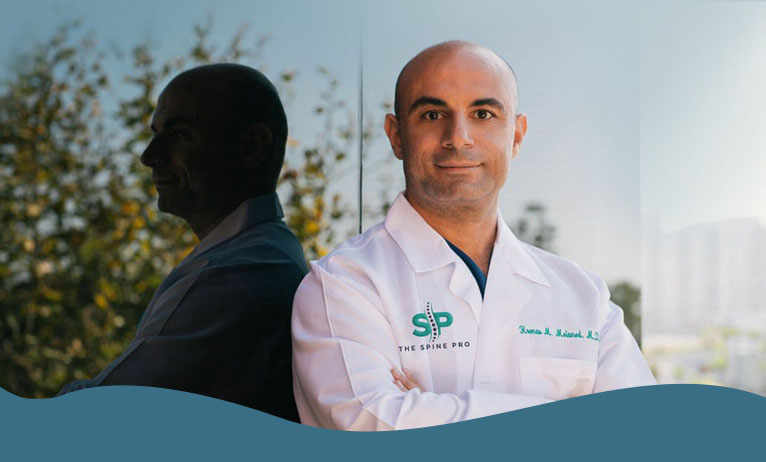
 When most people think of chest pain, concerns about heart health often come to mind first. While it’s true that chest pain is often linked to the heart, for many people, the true source often lies in the spine. Renowned orthopedic spine surgeon Dr. Hooman Melamed specializes in uncovering and treating spine-related causes of chest discomfort and offers personalized treatment options for chest pain relief in Beverly Hills, CA. Read on to learn more about how spinal conditions can contribute to chest pain.
Chest Pain Caused by Spine Issues
Coronary or heart-related problems remain one of the leading causes of chest pain. Health problems like atherosclerosis, the buildup of plaque in the arteries, affect as many as half of Americans between the ages of 45 and 84. However, research shows that a high number of patients in outpatient settings also suffer from musculoskeletal or spine-related chest pain.
Several different spinal conditions can lead to symptoms of chest pain. For example, herniated discs, degenerative disc disease, bone spurs, and nerve compression can radiate pain into the chest. Nerve irritation in the thoracic spine — the middle section of your back — can mimic heart-related chest pain. This often feels sharp, burning, or pressure-like, and can worsen with movement or certain postures. Because it closely resembles cardiac pain, many people undergo extensive cardiac (heart) testing before discovering that the spine is actually the true source of their discomfort.
Chest Pain Causes and Diagnosis
Chest pain can arise from a wide variety of conditions originating in different parts of the body. Some of the most common ones include:
- Cardiac causes: Coronary heart disease, microvascular disease, aortic valve stenosis, and coronary artery spasms are the leading cardiac causes. Chest pain may be accompanied by nausea, indigestion, fatigue, shortness of breath, or dizziness.
- Digestive causes: Gastroesophageal reflux disease (GERD), esophageal spasms or swallowing disorders, or stomach ulcers can all cause pain that feels similar to cardiac discomfort.
- Lung-related causes: Pulmonary hypertension (high blood pressure in the lung arteries), pleurisy (inflammation of the lining of the lungs), or even a pulmonary embolism (blood clot in the lungs) can trigger sharp or pressure-like chest pain.
- Spine-related causes: A herniated disc pressing on nearby nerves, spinal stenosis (narrowing of the spinal canal), scoliosis (spinal curvature), or muscular strain.
- Other musculoskeletal causes: Costochondritis (inflammation of the cartilage around the ribs), broken rib, or muscle tension from posture.
Since there are so many potential causes of chest pain, a proper diagnosis requires careful attention. Experts note that a good medical history and physical exam are critical pieces of the diagnosis. Dr. Hooman Melamed emphasizes a thorough evaluation with each and every patient. In addition to taking a patient’s medical history and performing a physical exam, his diagnostic process may involve advanced imaging techniques, such as magnetic resonance imaging (MRI) or computed tomography (CT).
Expert Chest Pain Treatment Options in Beverly Hills
If, after diagnosis, it’s revealed that spine-related issues are causing your chest pain, Dr. Melamed can offer a spectrum of care tailored to your specific needs.
Dr. Melamed always prefers to start with conservative, non-surgical options — a philosophy that minimizes unnecessary procedures and reduces recovery time. Many patients find relief through regenerative cell therapy, which uses your own cells to reduce inflammation and support natural healing. These treatments are often complemented by holistic strategies, like posture correction, strengthened exercises, and non-opioid pain management, to ease the pressure on the spine.
If further intervention is needed, Dr. Melamed offers a range of state-of-the-art minimally invasive surgical treatments, all of which are designed to relieve pressure while speeding recovery and avoiding large incisions. For example:
- Microdecompression (microdiscectomy): Gently removes irritating disc fragments or spine spurs.
- Artificial disc replacement: Helps maintain spinal mobility by replacing damaged discs rather than fusing them.
- Ultra-minimally invasive biportal endoscopic spine surgery (BESS): Uses two small portals — one for viewing, one for instruments — offering a panoramic surgical view that improves precision, preserves spinal stability, and speeds healing.
- Robotic and navigation-assisted, laser-assisted, precise, outpatient surgery
Dr. Melamed also offers more involved procedures when needed, including cervical and lumbar surgery, scoliosis and deformity surgery, and outpatient fusion procedures. These treatment modalities are often reserved for more complex conditions or in cases where conservative treatments haven’t provided adequate relief.
Regardless of your treatment plan, Dr. Melamed will provide you with patient education resources, personalized treatment planning, and detailed post-operative care instructions to keep your recovery smooth and your spine strong.
Prevention Strategies and Long-Term Management
Relieving chest pain is only part of the solution — it’s equally important to keep it from coming back. Dr. Melamed emphasizes prevention and long-term management as part of every treatment plan.
Posture awareness is one of the most effective strategies for preventing chest pain and discomfort. Slouching or sitting for long periods of time can strain the thoracic spine and surrounding muscles, leading to recurring discomfort. Simple changes, like using supportive, ergonomic seating, adjusting desk height, or taking frequent breaks to stand and stretch, can make a big difference.
Building core strength helps a lot, too. Gentle exercises that stabilize the muscles around your spine help reduce stress on discs and joints, preventing flare-ups over time. Consider incorporating low-impact exercises into your exercise regimen, such as yoga, swimming, cycling, or walking. These can build core strength while also keeping the body flexible and resilient.
Dr. Melamed also encourages patients to focus on stress management. Stress often causes muscle tension in the chest and back, which can mimic or worsen pain. Breathing exercises, mindfulness, and adequate rest are valuable tools.
Book an Appointment With Dr. Melamed
If chest pain is affecting your quality of life, know that expert help is just a click away. Whether it stems from your spine or another source, getting the right diagnosis and treatment is essential. Dr. Melamed offers compassionate, expert care using the most advanced treatment methods available. Schedule your consultation today and take the first step toward finding chest pain relief in Beverly Hills, CA.