

Is Scoliosis Hereditary?
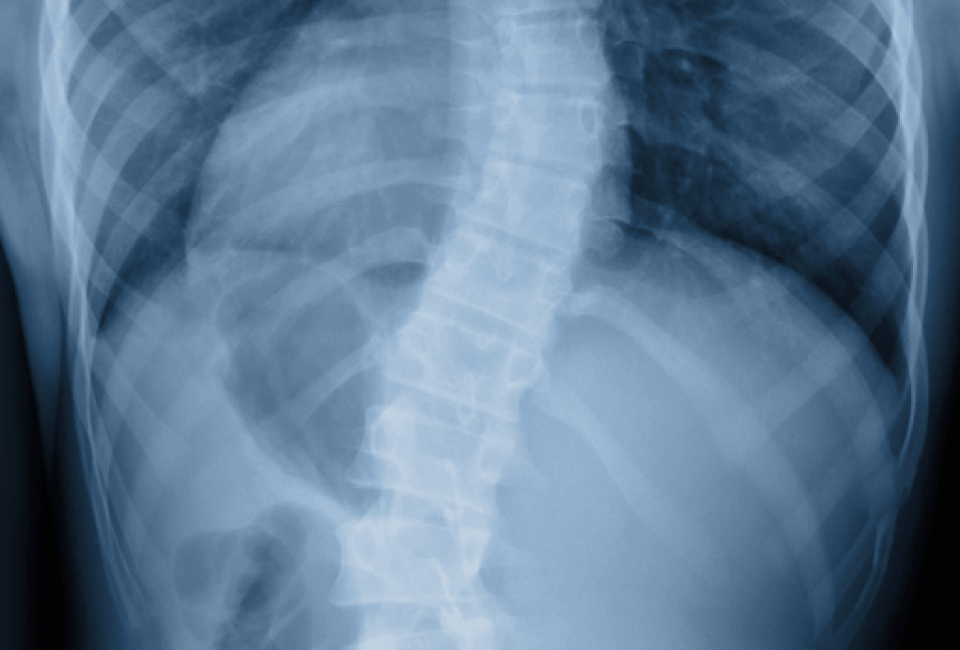 You may recall being checked for scoliosis by your primary care provider or a school nurse as a child. To screen for this spinal condition, you may have been asked to stand up straight while a nurse or physician checks your back for uneven shoulders, or bend forward while they check for a hump in the ribs. These quick exams are designed to catch early signs of spinal curves. In some people, they can appear without any family history. However, for others, scoliosis can sometimes be passed down through families.
Scoliosis is a sideways curvature of the spine that most commonly develops during late childhood or adolescence. This condition is affected by multiple factors, including both inherited traits and individual growth-related changes. So, is scoliosis hereditary?
Understanding Genetic vs. Hereditary: What’s the Difference?
In medical terms, “genetic” and “hereditary” describe different but related ideas. A genetic condition involves changes (also called mutations or variations) in DNA that influence how the body grows and develops. A hereditary condition is a type of genetic change that is passed directly from parent to child.
While scoliosis is linked to genetics, it isn’t inherited in a simple or predictable way. A parent may carry traits related to spinal growth and never develop a spinal curve, while a child may.
Family Risk Patterns: What the Numbers Tell Us
Family history is one of the strongest risk factors for idiopathic scoliosis — one of the three main types (discussed in more detail below). Research shows that the condition appears more often among relatives of those living with the condition than in the general population. About 7% to 11% of first-degree relatives — parents, siblings, or children — also develop scoliosis. The likelihood becomes lower in more distant relatives, affecting about 2.4% of second-degree relatives and 1.4% of third-degree relatives.
Studies of twins show that identical twins develop scoliosis together more often than fraternal twins. This shows that while genes matter, other growth and environmental factors also play a role.
Genetics is only one piece of the puzzle, and not every relative will develop a spinal curve. Researchers estimate that genetics explains roughly 38% of susceptibility. About 62% is related to individual growth and environmental factors.
Does Scoliosis Skip a Generation?
Scoliosis can sometimes appear to skip a generation. This is because the condition is influenced by many genes and growth factors. So, a parent may carry traits linked to spinal development without ever developing a noticeable curve. A child, however, may still develop scoliosis during a rapid growth period.
Types of Scoliosis and Their Heritability
Scoliosis is categorized into three main types: adolescent idiopathic scoliosis (AIS), congenital scoliosis, and neuromuscular scoliosis.
Adolescent idiopathic scoliosis is the most common, accounting for about 80% of cases. Still, this condition only affects about 2% to 3% of adolescents in the United States (U.S.) overall. “Idiopathic” means that the exact cause is unknown. Many patients have affected relatives, and family members show higher rates of scoliosis than the general population. Even so, genetics alone doesn’t determine who will develop a curve.
Congenital scoliosis is present at birth and occurs when the bones of the spine don’t form normally during pregnancy. This type is related to early spinal development in the womb, not family inheritance. It accounts for about 10% of all scoliosis cases.
Neuromuscular scoliosis develops when nerves or muscles can’t properly support the spine, such as in certain neurologic or muscular conditions. In these cases, the underlying medical disorder is the primary cause.
You may have also heard of a fourth type, referred to as degenerative or adult-onset scoliosis. It happens when spinal joints and discs wear down over time and is linked to aging changes, not heredity. Overall, the role of genetics is strongest in AIS.
The Genetic Research: What We Know in 2026
Genetic research has helped to explain why AIS tends to run in families. However, we know that it doesn’t follow a simple pattern, nor can it be attributed to a single gene change. Instead, researchers describe scoliosis as “polygenic.” This means that many small genetic differences can add up to increase risk, especially during years of rapid growth.
Researchers group genetic factors into three broad categories:
- Genes linked to susceptibility
- Genes linked to disease progression
- Genes linked to both susceptibility and disease progression
Some genes have been studied because of how they relate to how the spine forms and how the body controls posture. For example, one gene called CHD7 is involved in early body and skeletal development. Recent research has found CHD7 genetic variants associated with AIS.
Other studies highlight regions near PAX1 — a gene tied to spine development.
Research using genetic mapping strategies has identified candidate regions on chromosomes 6, 9,16, and 17, further supporting the idea that multiple genetic signals contribute to how the spine grows and aligns. Overall, the evidence shows that genes influence risk, but growth patterns and body mechanics still determine whether a curve actually develops.
Can You Develop Scoliosis Without a Family History?
Many people with scoliosis have no known relatives with the condition. According to the Scoliosis Research Society, about 30% of people with AIS report a family history, which means that about 70% develop scoliosis without a known family connection.
What Parents With Family History Should Know
It’s important to know that even if your child is at risk for scoliosis, a diagnosis usually isn’t an emergency, and most children can continue school, sports, and daily activities normally and safely. The main concern is whether a curve will worsen as a child grows, so regular check-ups during childhood and adolescence are important.
Most children are diagnosed between the ages of 10 and 15, when growth is fastest. Early monitoring allows for timely scoliosis treatment, such as observation or bracing, to help prevent progression. Surgery is only needed in about 10% of cases. Parents should also know that scoliosis isn’t caused by posture, exercise, or anything they did. It can’t be prevented, but for most people, it can be managed safely and successfully.
Make an Appointment With Dr. Hooman Melamed
If you’re concerned about family risk or early signs of scoliosis, schedule a consultation with Dr. Hooman Melamed today. A professional evaluation can identify spinal curves early and guide appropriate monitoring or treatment so you can plan confidently for long-term spine health.

Dr. Hooman Melamed
Founder of The Spine Pro since 2005, highly regarded and board-certified orthopedic spine surgeon Dr. Hooman M. Melamed has been named to the Super Doctor’s list and Prestigious Castle Connolly “Top Doctor” multiple years in a row. In addition to his surgical skills, the L.A. resident has become the “go-to” expert on TV programs such as Dr. Oz, The Doctors, Fox News and local TV.
Read More about Dr. Hooman Melamed →


