Spinal discs are your spine’s natural shock absorbers. Through age or injury, these discs can become compromised, leading to back pain and other symptoms. If you are experiencing symptoms from a collapsed disc, there are treatments available in Beverly Hills.
What Is a Collapsed Disc?
A collapsed disc is an intervertebral disc that has lost height and structural integrity. Many people develop collapsed discs as a result of the normal aging process or degenerative disc disease. Your spine absorbs significant stress and load, and spinal discs accumulate wear and tear that can eventually result in collapsed discs. Spinal discs contain water, which helps absorb shock and load to the spine. Over time, these discs dehydrate and become less flexible, causing them to shrink and reducing their ability to absorb shock. Repetitive movements that place a significant load on the spine, such as jobs that require heavy lifting, can increase the likelihood of developing a collapsed disc. Traumatic injuries such as falls and car accidents can also result in collapsed discs.
Symptoms of a Collapsed Disc You Shouldn’t Ignore
Many collapsed discs are asymptomatic. However, if neural tissue is compressed by the collapsed disc, it can cause symptoms such as:
- Pain in your back accompanied by numbness, tingling, or pain that radiates to one or more of your limbs
- Difficulty or pain from bending or turning your head
- Unusual weakness or muscle spasms in your limbs
Where your back pain is, and which parts of your body are affected, are determined by where the collapsed disc is in your spine. Most commonly, collapsed discs develop in the lumbar (lower) spine or the cervical spine (neck), though they can also occur in the thoracic (middle) spine. Collapsed discs in the lumbar spine will primarily cause symptoms in the lower body, including your buttocks, hips, legs, and feet. This is also known as sciatica. Collapsed discs in the cervical spine will primarily cause symptoms in your arms or hands.
If you experience any of the following symptoms, seek treatment immediately:
- Sudden or rapidly worsening pain in your back
- Progressive weakness or numbness, especially if it affects multiple areas
- Incontinence (loss of control of your bladder or bowels)
- Back pain accompanied by night sweats, fever, or unintended weight loss
How a Collapsed Disc Is Diagnosed in Beverly Hills
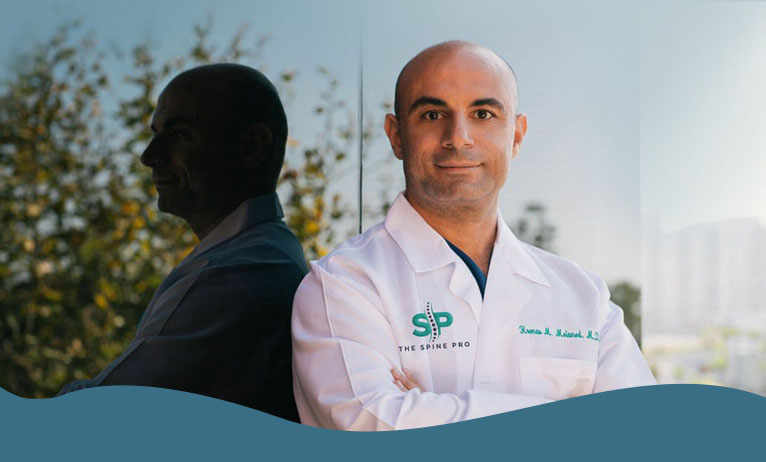
The Spine Pro offers diagnosis and treatment of collapsed discs in the heart of Beverly Hills. Dr. Hooman Melamed is a board-certified orthopedic spine surgeon nationally recognized for his expertise in spinal health. He specializes in holistic, noninvasive, personalized treatment.
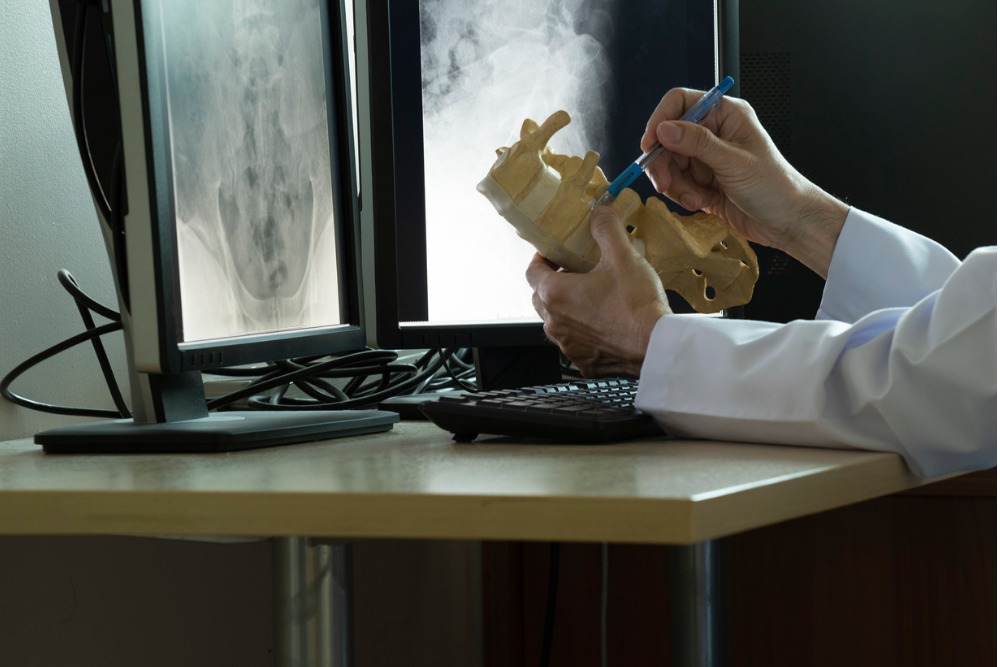
To diagnose a collapsed disc, Dr. Melamed will perform advanced imaging tests and functional movement assessments. Imaging to diagnose a collapsed disc can include X-rays, CT scans, or MRIs, along with specialized imaging for the spine. Dr. Melamed may use a myelogram, which provides detailed images of the spine and can be used to identify physical abnormalities, or an electromyelogram, which measures nerve function and can be used to identify nerves affected by the collapsed disc. He will also use functional movement assessments to identify how the collapsed disc is impacting you and your movement and determine the best treatment plan.
Collapsed Disc Treatment in Beverly Hills
At The Spine Pro in Beverly Hills, surgery is always a last resort. Dr. Melamed specializes in the latest holistic and noninvasive treatments for your back pain. He will work closely with you to identify the interventions that will work best for your symptoms and lifestyle. Treatment approaches used by Dr. Melamed for a collapsed disc include:
- Non-steroidal anti-inflammatory drugs (NSAIDs) to relieve pain, without the addiction risk of opioid medication
- Steroid injections near the spinal cord (epidural injections), which may relieve chronic back pain from collapsed discs
- Physical therapy or specialized exercise programs, such as Pilates, yoga, Tai Chi (an ancient martial art), or water therapy, tailored to increase your core strength and relieve symptoms of a compressed disc
- Radiofrequency ablation, a noninvasive procedure in which radio waves are delivered to a pain-causing nerve to temporarily block the nerve signaling
- Spinal cord stimulation, such as use of a transcutaneous electrical nerve stimulator (TENS) unit
- Manual therapy or acupuncture to help naturally control pain
- Lifestyle and diet interventions to naturally reduce inflammation and pain
Unfortunately, some patients do not respond to these conservative interventions. Dr. Melamed is a recognized expert in state-of-the art surgical techniques, including minimally invasive spinal surgeries such as microdecompression and ultra-minimally invasive biportal endoscopic spine surgery (BESS), which minimize trauma to the surrounding tissue, hasten recovery, and maximize range of motion in the long term. Studies have demonstrated that BESS offers similar or improved clinical outcomes compared to other types of surgical interventions, with lower complication rates and shorter hospital stays. Dr. Melamed does not use opioid pain medication for any of his microdecompression interventions.
Other surgical options for collapsed discs include artificial disc replacement (ADR) or spinal fusion surgeries. ADR replaces the damaged disc with an artificial one, which restores disc height and maintains the natural range of motion in the affected area. Spinal fusion may be required for more severe cases; in that case, the damaged disc will be removed and the vertebrae fused. Dr. Melamed avoids spinal fusion in all but the most severe cases and will work with you to choose the most appropriate surgical intervention for your needs.
Recovery From Treatment
While degenerative changes to the spine cannot be reversed, the prognosis (outlook) for a collapsed disc is quite good, especially with the options now available for noninvasive or minimally invasive treatment. Most patients who receive noninvasive treatments with The Spine Pro see improvement of symptoms within a few weeks, and those who need minimally invasive spine surgery can typically return to most activities within 2-4 weeks. Dr. Melamed emphasizes holistic recovery programs, including physical therapy, ergonomic retraining, and lifestyle or diet interventions to minimize inflammation.
Make an Appointment With Dr. Melamed
If you are experiencing symptoms from a collapsed disc, schedule a consultation with Dr. Melamed today to discuss the options for state-of-the-art care in Beverly Hills.
Insurance
and Billing
We provide a very high level of individualized and concierge care. Therefore, we are out-of-network with almost all insurances, but as long as you have out-of-network benefits, we are happy to work with you, bill on your behalf, and verify your benefits.