
Your spine protects your spinal cord and helps absorb the forces generated by movement. Unfortunately, its intricate structure and constant exposure to shock and load make it vulnerable to injury and degeneration as you age. Over time, this can cause narrowing of the spinal canal, resulting in a condition known as canal stenosis.
Dr. Hooman Melamed, founder of The Spine Pro, is a board-certified orthopedic spine surgeon and a nationally recognized expert in holistic, minimally invasive, and innovative treatments for back pain. If you are experiencing symptoms from canal stenosis, there are treatments available at The Spine Pro in Beverly Hills.
What Is Canal Stenosis and Why Does It Cause So Much Pain?
Canal stenosis occurs when the spinal canal has become too narrow and is putting pressure on the spinal cord and the nerves that branch off of it. The spinal cord is a thick bundle of nerves, so any constriction can cause bothersome or painful neurological symptoms. As the nerves become irritated and inflamed, they may swell, which further decreases the space available and worsens symptoms. Narrowing of the spinal canal can also put pressure on the vasculature (blood vessels) of the spinal cord. Canal stenosis is often progressive (gets worse over time). It can be aggravated by everyday motions like standing and walking because standing upright further reduces the size of the spinal canal. Altogether, canal stenosis can be quite painful and limiting. Thankfully, however, there are treatments available to reduce pain and symptoms and help you return to a normal life.
Recognizing Canal Stenosis Symptoms
Canal stenosis symptoms can be quite variable, depending on the cause of the stenosis and the area of the spine that it affects. Most commonly, canal stenosis affects either the cervical spine (neck) or lumbar (lower) spine, although it can also develop in the thoracic (middle) spine. It can be asymptomatic (no symptoms) even when changes are visible on imaging tests, and symptoms may come and go. Canal stenosis often causes pain, tingling, numbness, or weakness in one or more parts of your body. The location of these symptoms will depend on the part of the spine that’s affected; stenosis in the lumbar spine will cause symptoms in the lower body (hips, buttocks, legs, or feet), while stenosis in the cervical spine will cause symptoms in the upper body (arms or hands).
Other symptoms from lumbar stenosis might include:
- Neurogenic claudication, which is heaviness or weakness in the legs that worsens with prolonged standing or walking and improves with sitting or leaning forward
- Problems with your feet
- Lower back pain
Other symptoms of cervical stenosis might include:
- Neck pain
- Difficulty with walking or balance
- Problems with hand coordination
- Incontinence (loss of control of your bladder or bowels)
Canal stenosis usually progresses gradually. If you experience sudden-onset symptoms such as rapidly spreading or worsening numbness, tingling, or pain, or sudden incontinence, seek immediate medical care. These can be signs of a serious condition called cauda equina syndrome.
What Causes Canal Stenosis?
Canal stenosis can be either congenital (present from birth) or acquired. Congenital canal stenosis can arise from genetic conditions affecting bone growth and defects in the development of the spine, spinal cord, or nerve roots. Congenital canal stenosis is relatively rare, but it typically causes symptoms at an earlier age than acquired canal stenosis.
Acquired canal stenosis is caused by injuries or degenerative changes in the spine over time and occurs later in life, usually after age 50. Anything that causes narrowing of the spinal canal can cause canal stenosis. This includes conditions such as scoliosis (abnormal curvature of the spine), bone overgrowths such as bone spurs, skeletal disorders such as ankylosing spondylitis or Paget’s disease of the bone, and herniated or bulging discs. Arthritis in your spine can contribute to canal stenosis; vertebrae rubbing together increases the formation of bone spurs, and the extra stress on the spine can cause thickening of the spinal ligaments. Less commonly, canal stenosis can result from tumors or cysts that encroach on the spinal canal, injuries to the spinal cord, or injuries to nearby tissue that cause substantial inflammation.
How Canal Stenosis Is Diagnosed in Beverly Hills
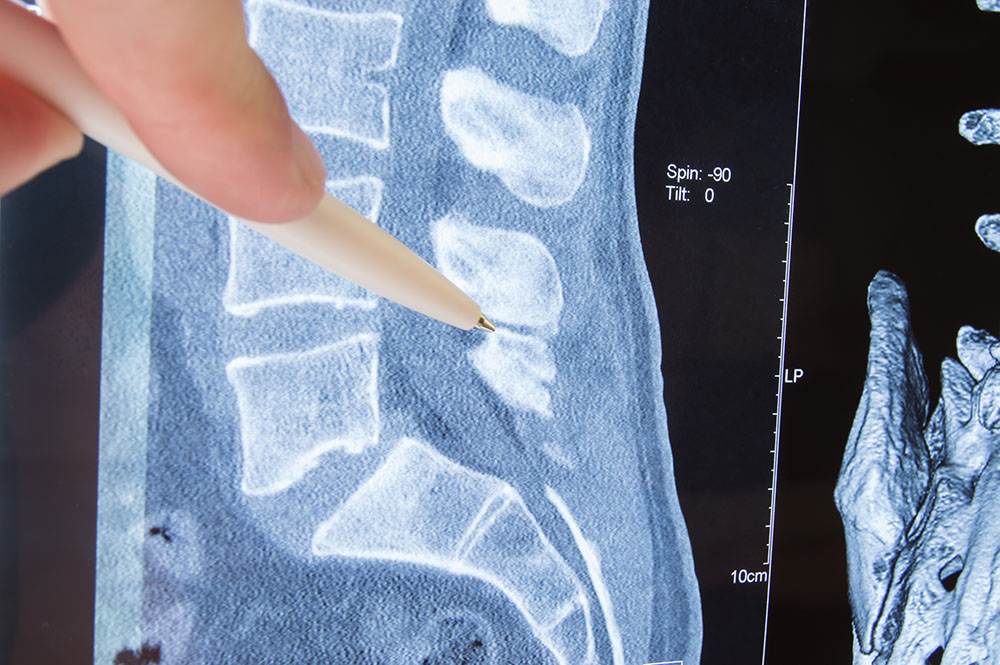
Canal stenosis is usually diagnosed by imaging. At The Spine Pro in Beverly Hills, Dr. Melamed will use a combination of techniques to diagnose canal stenosis, such as X-rays, CT scans, MRIs, and myelograms, a specialized technique used to visualize the spine and spinal canal.
Canal Stenosis Treatment Options: From Conservative to Surgical
There are multiple treatment options for canal stenosis, ranging from conservative or minimally invasive strategies to surgery. At The Spine Pro, Dr. Melamed and his colleagues emphasize holistic and minimally invasive strategies and recommend surgery only if those treatments are not effective.
Conservative options for treating canal stenosis include:
- Use of non-steroidal anti-inflammatory drugs (NSAIDs) to reduce pain and inflammation. Dr. Melamed avoids the use of opioid pain medication.
- Epidural (near the spinal cord) steroid injections for acute pain
- Physical therapy or yoga tailored to increase your core strength
- Alternative healing methods, such as acupuncture
- Use of a transcutaneous electrical nerve stimulator (TENS) unit, which delivers mild electrical pulses to relieve pain
If your symptoms don’t improve with conservative care, you may need surgery. Dr. Melamed is an expert in minimally invasive surgeries such as microdecompression surgery. This precisely targets the damaged area and reduces pressure on your spinal cord while minimizing trauma to other tissues, which reduces post-operative pain and recovery time. Dr. Melamed does not use opioid pain medication for any of his microdecompression treatments.
Some patients do need more extensive surgery, such as an artificial disc replacement or spinal fusion, especially if you have severe symptoms or substantial spinal instability. Dr. Melamed prefers to use these as a last resort and will work with you to create an appropriate treatment plan.
Make an Appointment With Dr. Melamed
The Spine Pro offers state-of-the-art care for canal stenosis right here in Beverly Hills. Schedule a consultation with Dr. Melamed today to find the best treatment option for you.
Insurance
and Billing
We provide a very high level of individualized and concierge care. Therefore, we are out-of-network with almost all insurances, but as long as you have out-of-network benefits, we are happy to work with you, bill on your behalf, and verify your benefits.